
Smart curtains
Smart Curtains in Singapore: Tracks, Power and Controls
Plan motorised curtains and blinds before renovation, including tracks, pelmets, power points, opening styles, controls and automations.
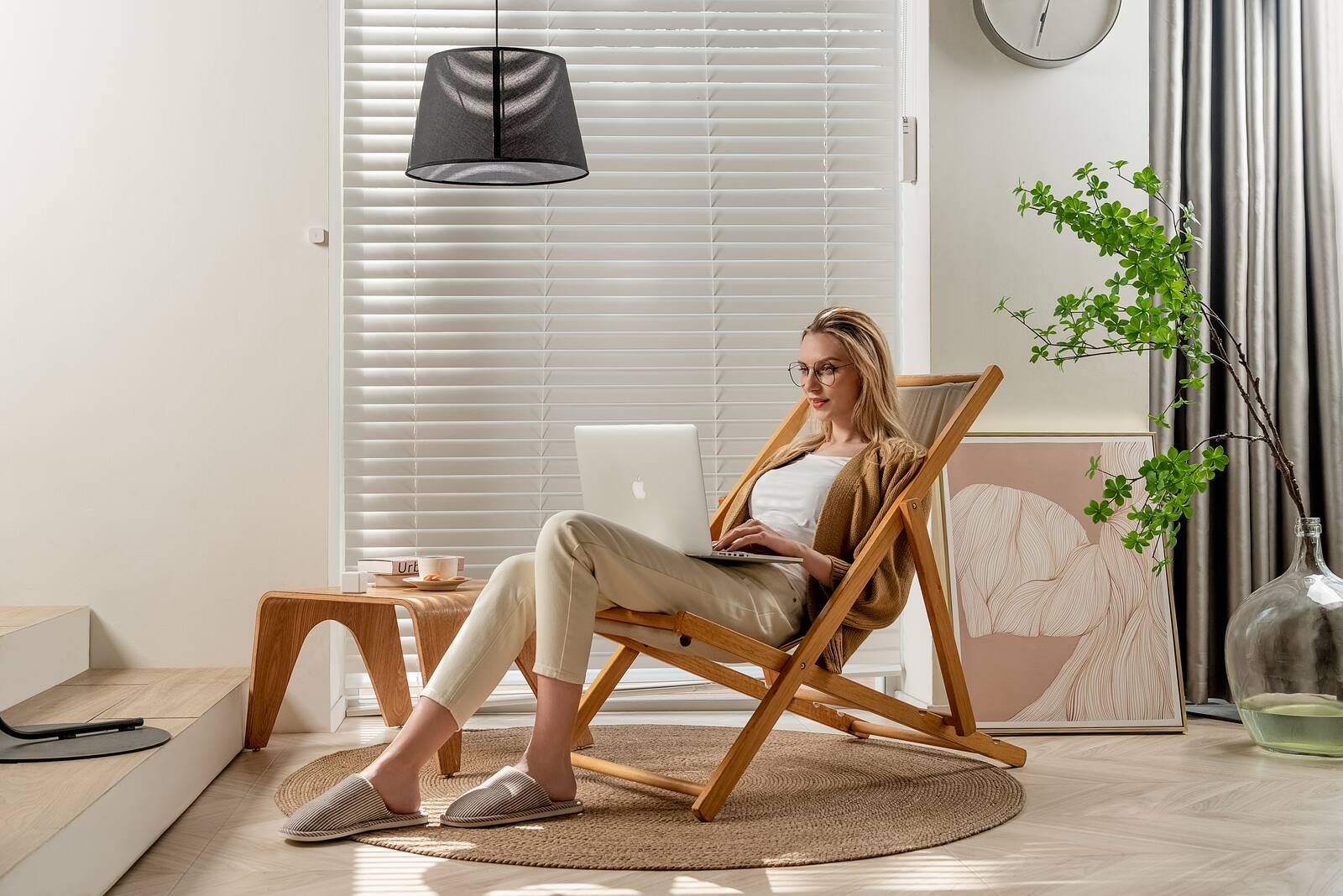
Motorised curtains involve a lot more than the motor. The track, the weight of the fabric, which way it opens, the space in the pelmet, the power point and where the fabric bunches up when open all have to work together.
Sort these out early in the renovation and you get a cleaner installation, with more control options left open afterwards.
On this page
- Curtains or blinds, and where the fabric stacks
- Centre-opening or one-way: laying out the curtain track
- Where the power point goes for a wired curtain motor
- Buttons, the app, scenes or voice for opening curtains
- Setting the motor's open and close limits
- Automating curtains by sunlight, sunrise or a schedule
- What to measure and write down before you order
- Testing the finished curtains before you sign off
Curtains or blinds, and where the fabric stacks
A curtain that draws across the window uses a different track and motor from a roller blind. Day and night curtains may need a track each. A centre-opening curtain gathers at both sides and a one-way curtain gathers at one, which changes where the motor can go.
Measure the actual window and check the finished ceiling, pelmet and carpentry dimensions. An early floor plan isn't accurate enough to size a motorised system.
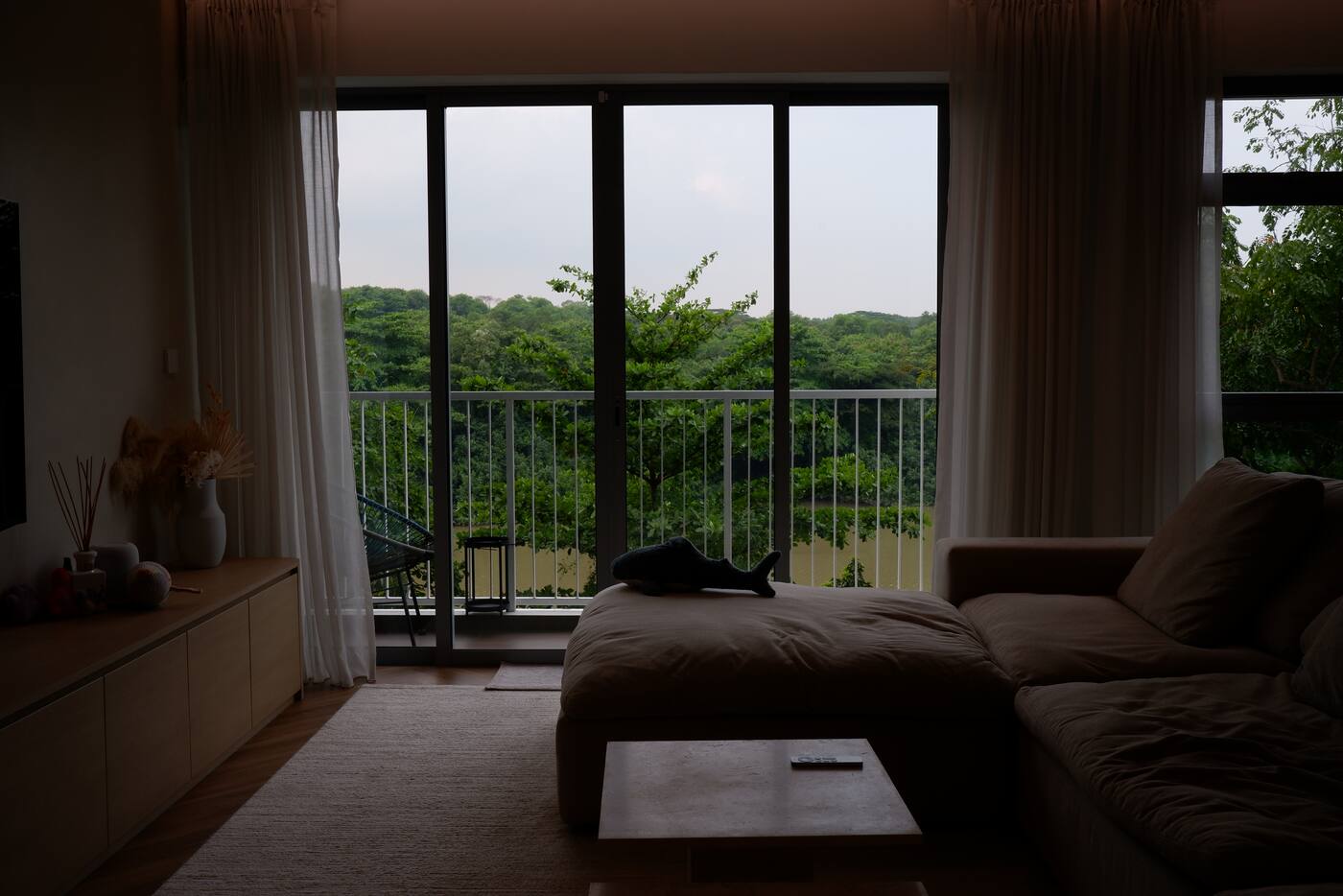
The fabric is wider than the window because the folds need fullness, and when the curtain is open it has to stack somewhere. Decide whether the stack can cover part of the glass or must clear it completely; that changes the track length and how much wall you need beside the window.
Centre-opening or one-way: laying out the curtain track
A centre-opening curtain splits into two panels that meet in the middle. A one-way curtain collects at one end. Which suits you depends on the window, nearby doors and furniture, the view and where the motor can be hidden but still reached. Corner and curved tracks need checking against the specific product's bend radius and drive.
Day and night curtains usually run on two tracks. If you want both motorised, you need two motors, power for both and enough of a gap between the tracks for the fabrics to pass without rubbing. Confirm the finished ceiling height before the curtains are made, because even a small change in height changes the drop.
Where the power point goes for a wired curtain motor
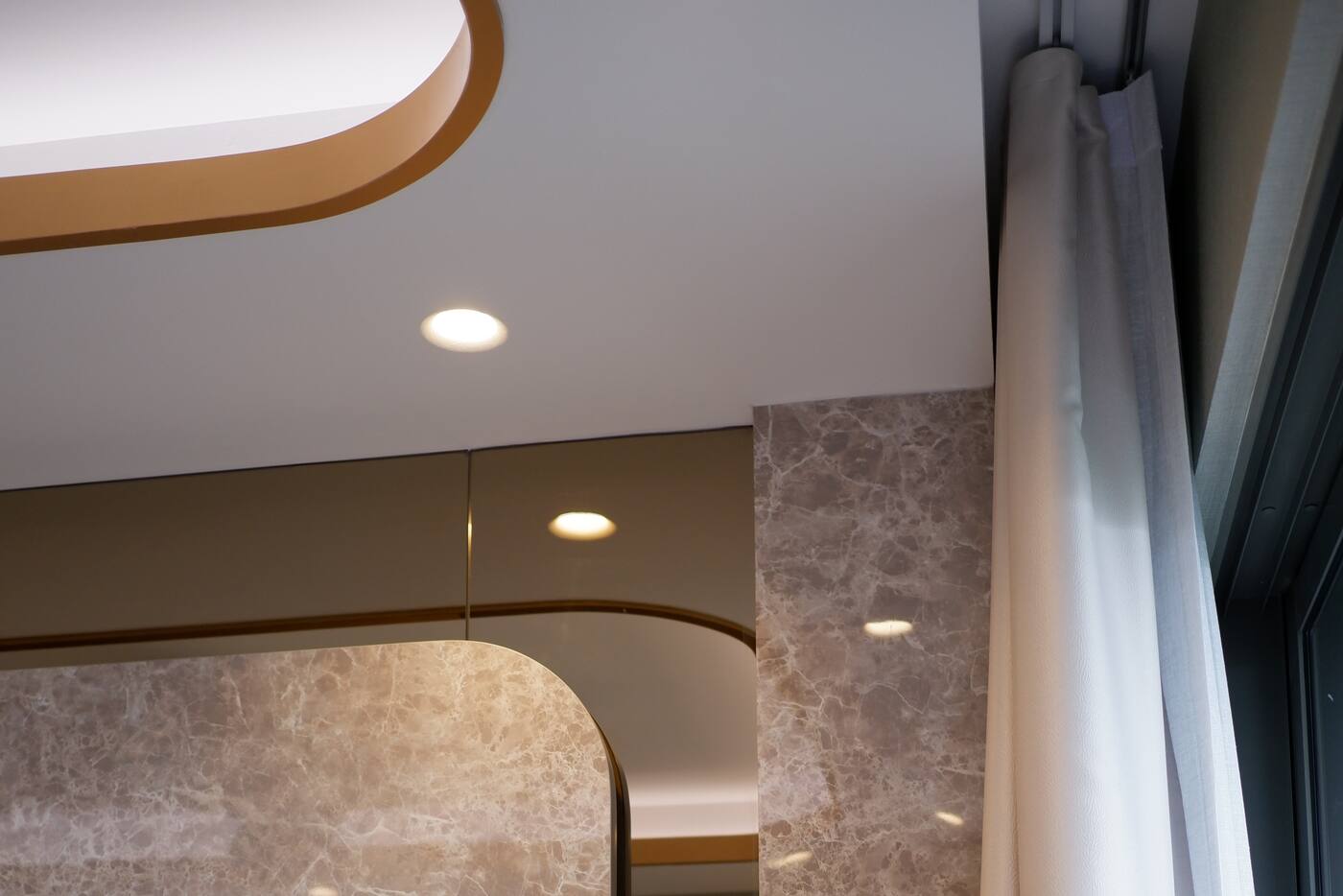
A wired curtain motor needs a power point in the right place, one that can be switched off and reached for servicing. Hide the cable by all means, but don't seal the plug or connections permanently behind carpentry.
Battery-powered retrofit options can avoid electrical work in some situations. Before choosing one, think about how you'll reach it for charging and how often the curtain will be used.
The motor's plug should reach the socket without an extension lead trapped inside the pelmet. Note which circuit feeds each motor.
View Curtain Driver E1 View Roller Shade Driver E1
Buttons, the app, scenes or voice for opening curtains
Have at least one physical control. Guests and family shouldn't need your phone to open a curtain.
Put the button where the curtain is used, not only next to a central smart panel, and give it separate Open, Stop and Close actions where the hardware allows. A percentage position is handy for glare, but a named scene is quicker for everyday use.
- A wall or wireless button for everyday opening and closing.
- The Aqara Home app for setup and for setting an exact position.
- A scene that moves the curtains along with the lights and air-conditioning.
- A compatible voice assistant or smart home platform.
- Opening by hand, or another fallback, where the product supports it.
Setting the motor's open and close limits
The motor has to learn where fully open and fully closed are. Set these after the final track, carriers and curtain are in, then watch it run through several full cycles. The fabric shouldn't drag, catch, hit furniture or bunch up around the motor. If the track itself is badly fitted, no automation setting will fix it.
Check what happens after a power cut, and after you pull the curtain by hand if the motor supports touch-to-start or manual operation. If the motor loses track of its position, you should know how to recalibrate it without taking the pelmet apart.
Automating curtains by sunlight, sunrise or a schedule
Opening in the morning, closing against the afternoon heat and closing for privacy in the evening are good first automations. Sunrise and sunset times shift slowly through the year, while a light sensor reacts to what's actually happening outside.
Think about privacy, glare, plants, pets and whether someone might still be asleep, and make sure you can pause the automation easily when your routine changes.
In a west-facing room, closing a sheer or blind before the worst of the glare helps without making the room dark. In bedrooms, only open automatically in the morning when a household mode or weekday condition says it's time; a curtain opening at the wrong moment is a bigger problem than pressing a button.
What to measure and write down before you order
- The finished window width and height, measured in several places.
- Curtain type, fullness, finished weight and which way it opens.
- How many tracks, which side the motor goes, stack-back space and pelmet clearance.
- The power point, cable route, how to switch it off and how to reach it later.
- How you'll control it, which platform and scenes you'll use, and the manual fallback if there is one.
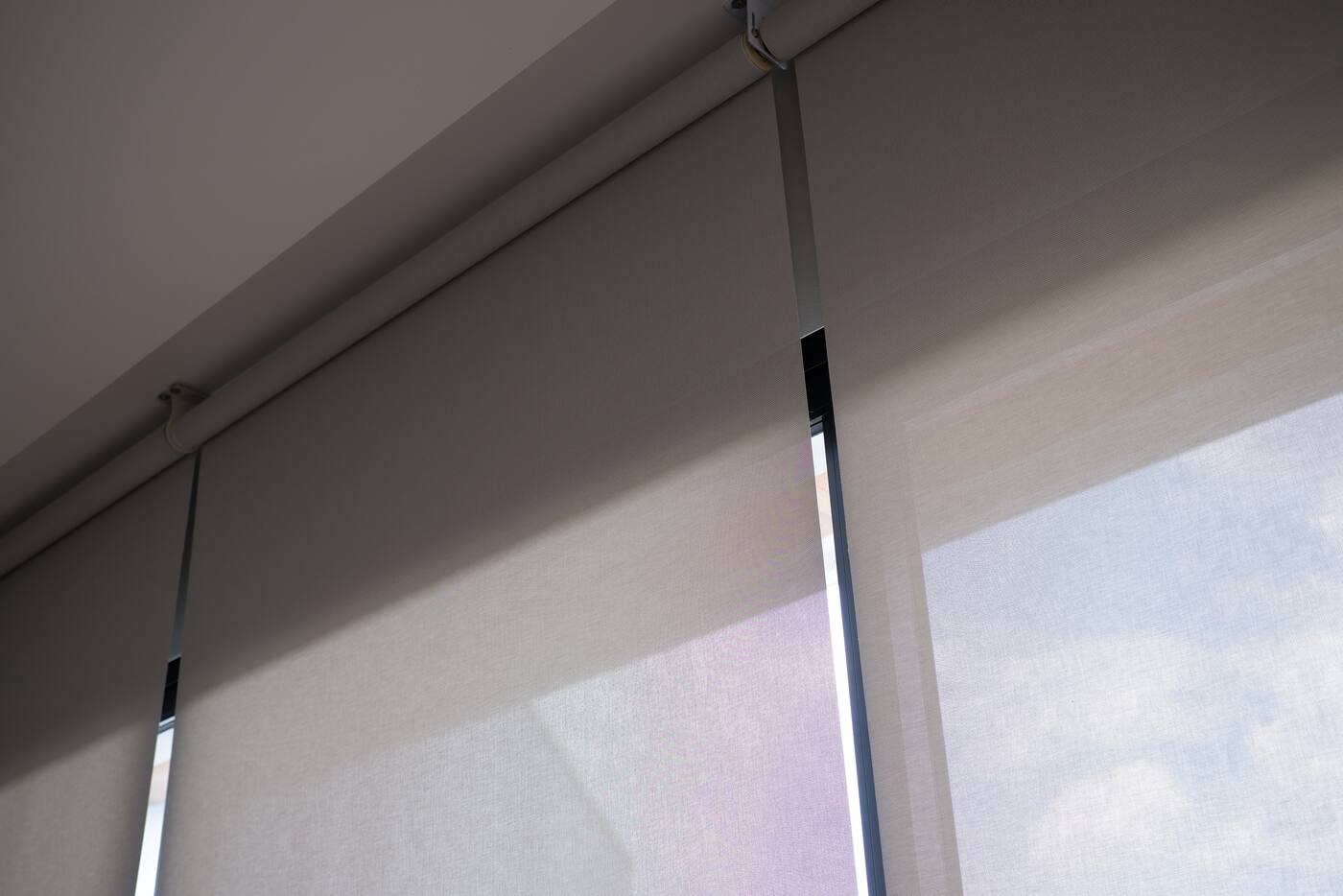
Testing the finished curtains before you sign off
Test only once the final fabric is up. Open, close and stop the curtain repeatedly from the button, the app and any scenes. Listen for noise, and check that it runs smoothly, the panels meet evenly in the middle, the fabric stacks where you expected and its position shows correctly in your platform.
Then try the awkward cases: something close to the fabric, a manual pull where supported, a power cut, and an automation running while the curtain is half open. Before the installer leaves, find out how to recalibrate the motor and where to switch off its power.
Check these before ordering
The window and track
- Finished window size and curtain weight
- Number of tracks, opening direction, motor side and stack-back
- Pelmet clearance, power route and access for servicing
Controls and after installation
- A physical button with Open, Stop and Close
- What you need from the app, platform and scenes
- How to reset the limits and recalibrate after a power cut
Test with the final fabric hung. A motor that runs smoothly on an empty track can still struggle with the real curtain.
Official references
Product and standards information was checked against these primary sources. The article above is original Aqara Singapore editorial content.
Before the track is made
Get the motor, track, fabric and controls to match.
Look through Aqara curtain products, or see the motors and controls working at our Experience Centre.