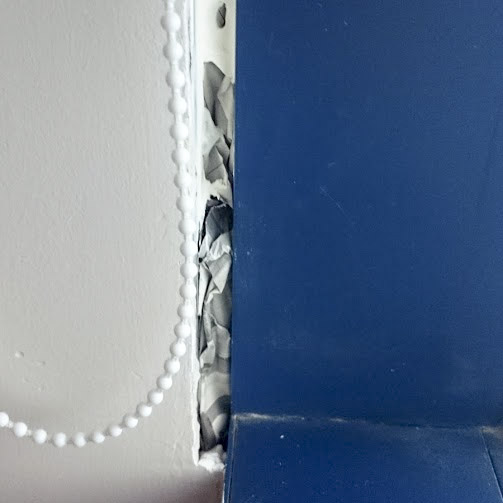
In August 2018, a video of newspaper found inside an HDB balcony wall went viral as “half cement, half newspaper”. HDB clarified that a renovation contractor hired by the flat owner had used it in 1999; the balcony itself was completed in 1984.
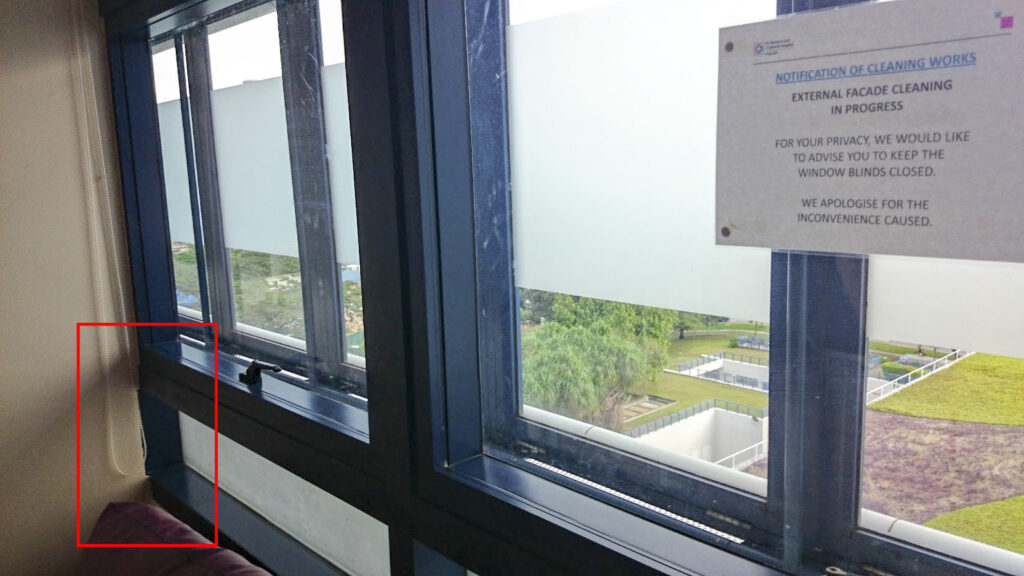
It didn’t surprise us. Stuffing newspaper into window joints used to be common. In 2014 we found the same thing in a ward window at KK Women’s and Children’s Hospital: newspaper packed into the joint, with a layer of acrylic sealant over it. The photos are below.
Why there’s a joint at all
The opening in the wall is always larger than the window, or the frame wouldn’t fit. That leaves a gap between frame and wall. The frame is mechanically fixed, so the filling doesn’t carry load. But left empty or badly filled, the joint lets in heat and water. Because the filling is hidden once the window is in, it’s an easy place to cut costs.
How to fill it properly
Mortar grout
The traditional method in Singapore for wider joints. It’s cheap, but it needs mixing, is messy, can crack because it’s rigid, and insulates poorly.
Polyurethane sealant
Used for narrower joints, over a backer rod. Very watertight and easy to apply, but expensive and a poor insulator.
Polyurethane foam
The standard in many other countries. One 750 ml can of Soudal PU foam gives up to 30 litres of cured foam, enough for several windows. It insulates well, is quick to apply and is watertight when applied properly. Foam isn’t UV-stable, so it needs covering with sealant, tape, mortar or trim.
Newspaper has no place in any of these.
Browse our PU foams or contact PFE Technologies for data sheets and application advice.